Brian: Stroke/TBI resource

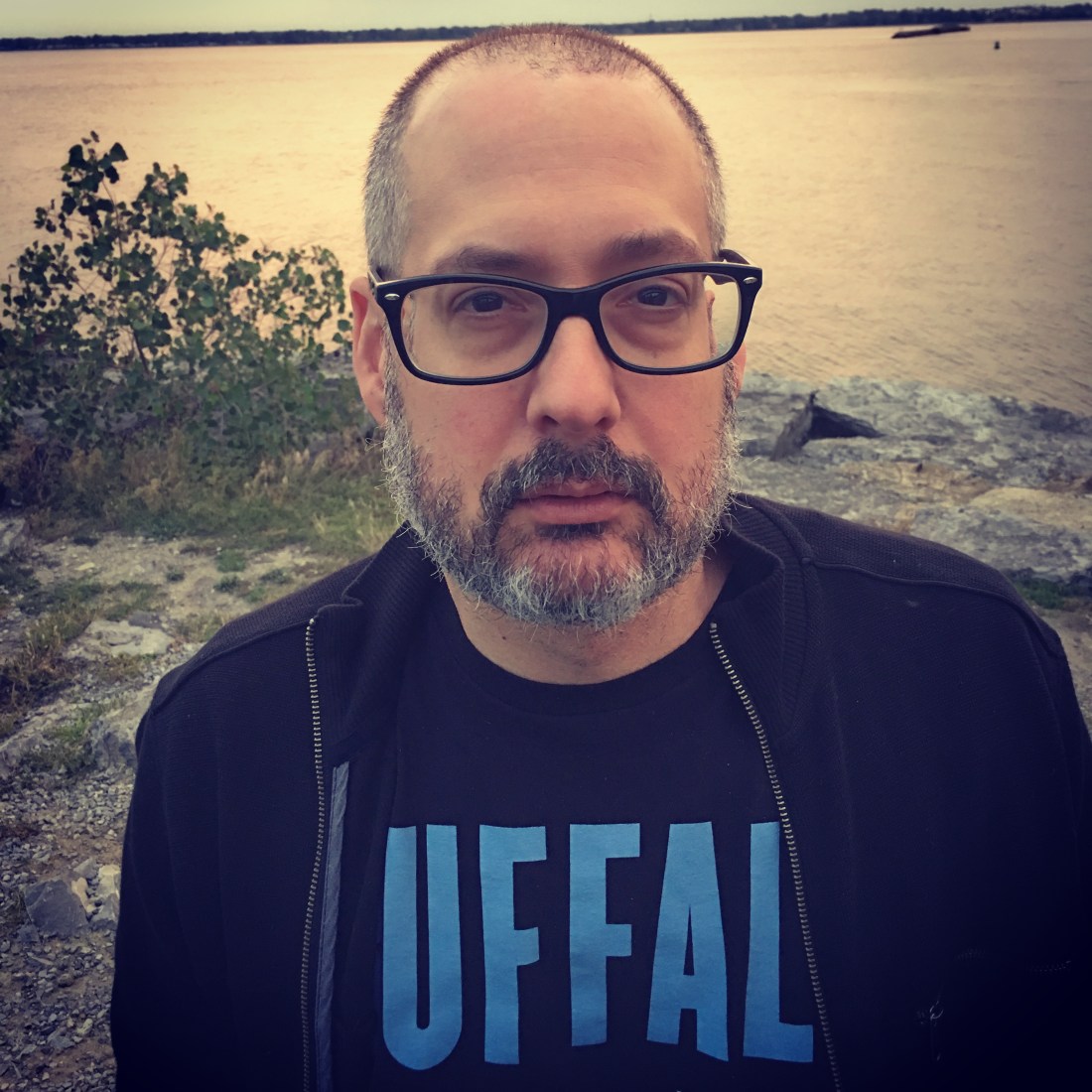
Did you know there is an online community of brain injury survivors from around the world? There is, and it’s all centered around a podcast. The NeuroNerds podcast addresses two of my favorite things: surviving a stroke & the Marvel Cinematic Universe. The hosts are stroke survivor Joe Borges and concussion survivor Lauren Manzano. Every week, the podcast features a new brain injury survivor, and a new brain injury charity and chat about nerdy subjects. For more information on the NeuroNerds click on this link.

Brian – What I remember

This post isn’t necessarily about aphasia. It is about my hospital experience (including being unable to speak, so I guess it is kind of about aphasia)
Things I don’t remember:
I don’t remember how I first became familiar with the term “aphasia”.
Things I do remember:
I remember my left leg going numb first thing in the morning. It was November 1, 2017. The day after Halloween.
I remember trying to decide between going an important meeting at Community Foundation of Greater Buffalo about their Healthy Homes program or driving to the Kenmore Mercy ER.
I remember being transferred from Kenmore Mercy to GVI after CT scan results came in: I had an arteriovenous malformation in my brain, and had to have open brain surgery.
I remember thinking “I’m too busy for brain surgery” and “how can I watch the UFC On Saturday if I have brain surgery today?”
I remember the neurosurgeon giving me a choice between getting the surgery right then and there or wait and observe the AVM & see if it gets worse. Me thinking if I wait, it would only prolong my sense of dread.
I remember signing the consent form for the 1st craniotomy.
I remember having to wait hours and hours for the craniotomy (It was put back several times because the surgeons had to prioritize emergencies as they came in).
I remember being sent home from the hospital to rest and recuperate but I don’t remember much from those few days that I was home, or how I got home. I thought I was done with all this, and it would be smooth sailing to recovery. They set me up with the Visiting Nurses Association.
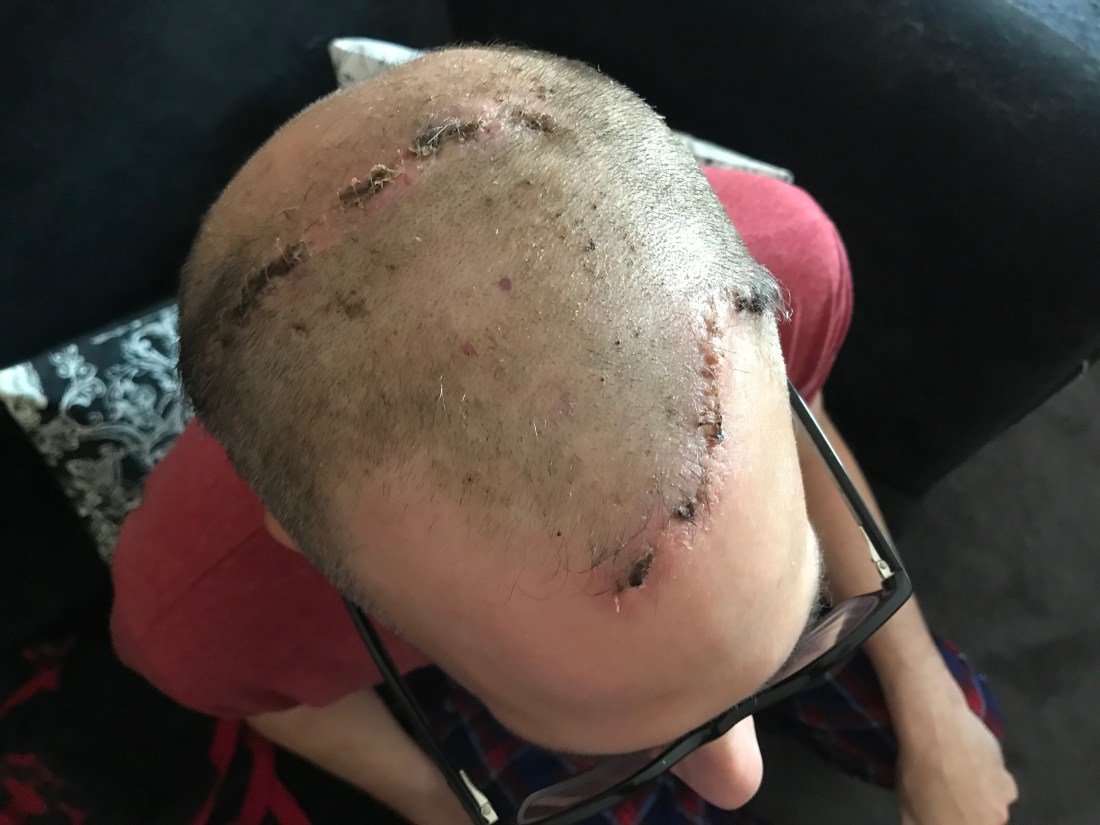
I remember having Jeanelle take a photo of the scar and me putting it on Facebook w/caption “dis no good”
I remember the first VNA Nurse being sick, coughing and sneezing and worrying about whether I would get it. As it turns out, I didn’t get her cold. I got something far worse on November 13th.
I remember a 2nd VNA nurse being there (apparently I let her in), me laying down on the couch, then being unable to verbally respond to questions. I remember being able to walk out to the ambulance, not knowing what was happening to me or why I couldn’t speak. It turns out I was having a left frontal subarachnoid hemorrhage.
I remember riding in the ambulance, waving to Jeanelle (who was following in her car) thinking that it might be the last time.
I don’t remember much after I got to the hospital, but was told my condition was worsening rapidly and I had to undergo emergency brain surgery. My wife tells me when I signed the paperwork to give consent for the 2nd surgery, I was in such a condition that I couldn’t speak at all, and my right hand was just hanging in the air after I signed because I didn’t have the wherewithal to put it down.
I don’t even remember the third craniotomy. That was the one where the cerebral angiogram showed that the original AV fistula, wasn’t completely resected, and they had to do another brain surgery – all in the space of 2 weeks.
After the surgery, I remember thinking I was hidden away in the basement of the hospital with nobody paying attention to me. When my mother was dying, I remember when she was taken to the hospital, her saying “why am i in the basement?” She wasn’t in the basement and neither was I. I later learned that there is a clinical term for the feelings I was experiencing (aloneness, neglect, suspicion that doctors, nurses, and even family members are plotting against you). It’s called “ICU Delirium”.
I remember a religious program that freaked me out. Did I dream it? Was it a hallucination? Was it on the TV?
I remember a guy in scrubs with a Texas accent (or what I thought was one), asking me to repeat the phase “no ifs ands or buts”. At first I, didn’t want to do it (because I wanted them to just let me die), but at some point my attitude changed and then I rehearsed it in my mind over & over for the chance to say it. This is how I realized that I wanted to live.
I remember the same guy asking me what year it was. At first I kept answering 1967, then I eventually got it right. He also asked me to name the president. I badly wanted to say Barack Obama, but had to admit it was Trump.
I remember I felt my life depended on my answers to these questions, and if I didn’t answer correctly, they would pull the plug and let me die. In reality there was no plug to pull (I wasn’t even on life support!) and they were never going to let me die.
I remember having this total sense of relief wash over me that I didn’t die, and they were sending me to the rehab floor.
I remember being unable to communicate that the bed was in a position so that I was sliding down feet first. I had forgotten that the bed had controls that would remedy the situation, so I spent a day or two very uncomfortable. Forgetting the word “glasses”, so I spent multiple nights not being able to see the TV. I thought that was just my condition. I couldn’t conceive of the concept of actually wearing glasses. When I remembered, and was able to communicate the word “glasses”, it felt like a mini triumph. I figured out how to work the TV remote just in time to leave.
I remember clawing at the head wrap/bandages in the middle of the night, throwing them on the floor – which apparently is a huge no no to the hospital staff. I was a problematic patient.
I remember being confined to a wheelchair with right side paralysis. Trying to wheel myself around using just my feet, because the chair would just turn to the right because my left arm was stronger than my right. At multiple times, they had to strap me in to the wheelchair, but I always figured out how to get out.
I remember Tamara (a nurse in the rehab unit) assuring me that I would recover, and someday write a book about my experience. (I dunno about a book. Let’s just start out with this blog post.) I’m still friends with Tamara to this day.
I remember Sharon (my physical therapist) encouraging me and making me work hard to regain strength in my right side. At some point, I started working hard on my own. I told Sharon my goal was to get out of the rehab unit and get home so I could eat sashimi. She thought that raw fish was gross. I don’t think she‘ll be getting some any time soon, but now I am eating sashimi…with chopsticks.
I remember not being able to write well with my right hand, and fearing it might be permanent. It wasn’t permanent. I have come to realize that the only thing that is permanent is impermanence.
I remember the first time I called Jeanelle and asked her to bring my electric shaver to to the hospital, not realizing that she would be scared to death when hospital number came up on her phone. I thought it was a big accomplishment not only remembering her phone number, but actually dialing the phone.
I remember my speech therapist at the rehab unit was named Kevin. The most frustrating part of speech therapy was not being able to describe basic photos (like a child riding a bike or people on a boat) while at the same time being able to come up with the oddest, most esoteric words.
I remember singing “gray would be the color, if I had I heart” over and over to Jeanelle. She must have thought I was crazy. Why on earth would I be singing Nine Inch Nails “Something I Can Never Have”? (A song I hadn’t heard in 20 years).
I remember my first roommate, Andre Pleasant, watching NBA basketball and asking for snacks (Lorna Doones cookies) all night long. The nurses were becoming completely exasperated with him, and so was I. I remember being jealous that he could watch TV and ask for snacks, when I was unable to either figure out the remote, see the TV, or find the words to ask for anything. I don’t even remember whether I was hungry. Jeanelle had to request that I be moved because I couldn’t get any sleep. I remember telling the night nurse to “knock me out”, which was the only way I could think of to request a sleeping pill.
I remember one patient who I called “the professor”, because his voice reminded me of the professor from the “Nightmare before Christmas”, and the fact that he zipped around in a motorized wheelchair. Unfortunately, he got rowdy and angry overnight and kept me up all night long with his yelling at the nurses. The part I remember the most about my stay at the rehab unit was not getting any sleep, which is the worst thing possible for a stroke victim.
I remember trying to track the time by the programs on MSNBC (Ari then Matthews then Chris Hayes then Rachel then Lawrence then Brian Williams) getting frustrated by the fact that all the same programs got repeated overnight so I couldn’t tell what the time was. Was it the 9pm version of Rachel or the 3am version? Every minute seemed like an hour. I remember being relieved every day when the news program before “Morning Joe” came on. It was 6am and I had still gotten no sleep.
I remember my 2nd roommate, an elderly gentleman named John Elliot. He ran a travel agency. I remember a priest coming in to talk to him at night. I was so upset about not being able to get any sleep. Later my wife told me the nurses said he was dying and might not make it out of the rehab unit. He did in fact make it out of there and lived over a year before passing away in February 2019.
I remember getting up out of the wheelchair and walking, then later being able to go up and down stairs. That was the biggest milestone towards being able to go home.
I remember finally being released from the hospital on December 12, 2017 – 42 days after I went to the Kenmore Mercy Emergency Room with numbness in my left leg.
By the way – the numbness is still there.

Brian: My Aphasia (and other assorted stuff)

thIM4DG6OA

Everyone’s aphasia is different and manifests in different ways. If everyone’s aphasia was the same, it might be simpler for SLP’s to treat it!  But alas, everyone’s aphasia is different.  My own aphasia goes something like this:

I can read and write just fine. Some people with aphasia have trouble reading or writing (or some combination or the two), some do not.

I can speak in complete sentences. (People with aphasia have varying degrees of difficulty with speech. We haven’t lost our intellect.)

I have trouble explaining complex concepts extemporenously.

I have difficulty concentrating and my mind often goes blank.

I have great difficulty multitasking, and easily get overwhelmed.

I have problems working and trying to speak while under pressure.

That’s my aphasia. What is your aphasia like? Write it in the comments or in a blog post.


Lauren Marks’ Recovery Story from Brain Anuersym/Aphasia
 

arteriovenous-malformation-1

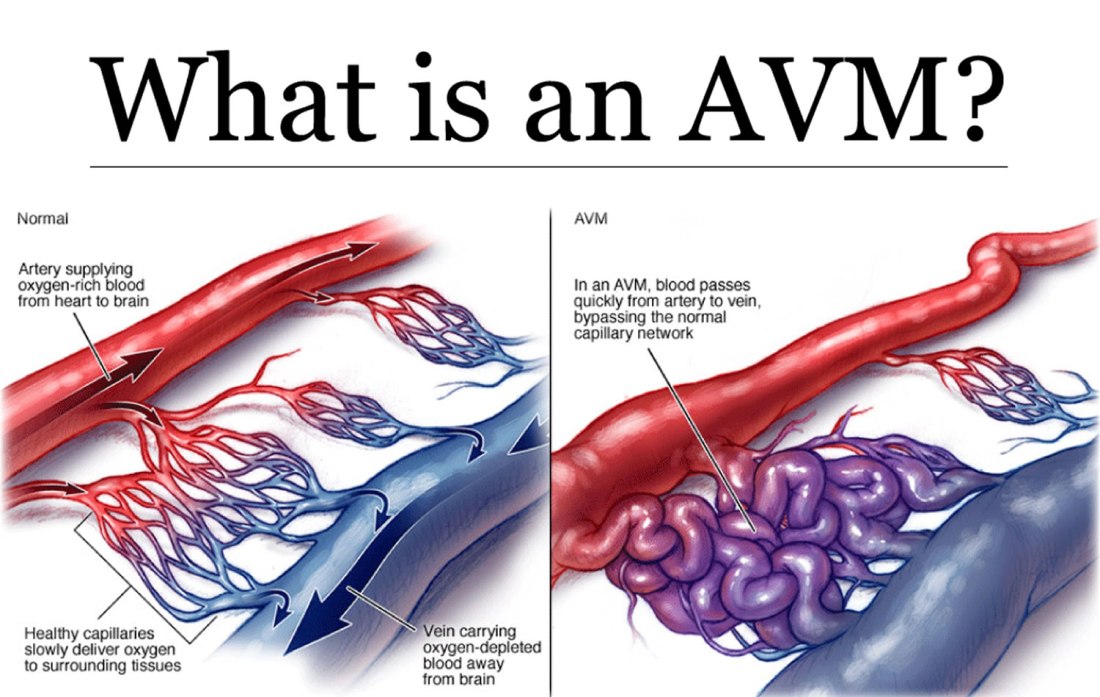
I had an Arteriovenous Malformation (AVM), a type of fistula of the brain that had to be resected via craniotomy. The only good thing is that, unlike most people that have this type of open brain surgery, I had the craniotomy done the very next day after diagnosis – which left me little time to get scared or freaked out.

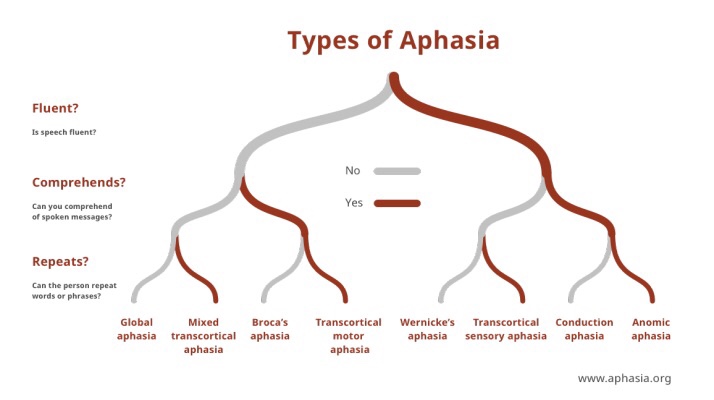
Brian’s post: Types of Aphasia and my individual therapy

This is Brian again. My individual therapy at Buffalo State College isn’t easy, but it is suited to my needs. Every hour goes something like this:

Rapid fire conversations: The student clinician has 3-4 other students come into the room (one at a time) and speak to me about various topics. I am not aware of what the topics will be. Eye contact, degree of expression, & speech fluency is evaluated by the clinician.

Movie/TV show plot explanation. In this part, the clinician evaluates my ability to explain complex concepts without a script. It’s really hard for me to do it fluently.

Distracted speech. My ability to speak while being distracted is evaluated by the clinician. We play a simple game (like checkers or scrabble) while I try to maintain the flow of conversation.

Fun fact: I don’t remember when I first heard the term aphasia. My wife doesn’t remember either.

Resources:

Three stroke survivors from Nebraska who started their own blog

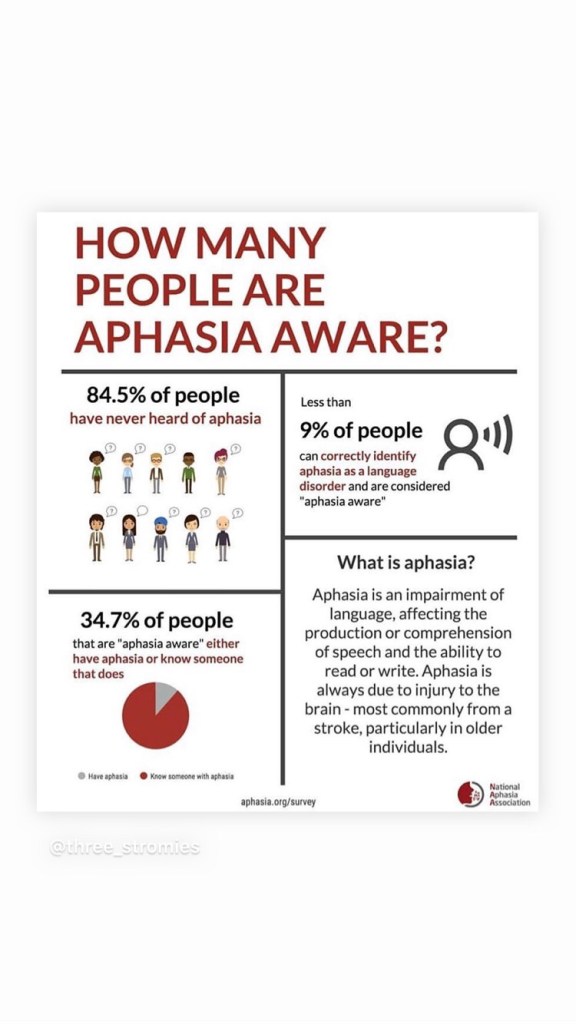
The National Aphasia Association